Unveiling the Potential of Slider Roller Weights in Scooter CVT Systems
Unlocking the full potential of scooters with motor sizes under 250cc involves delving into the intricate workings of their automatic variable transmission (CVT) systems. Central to this mechanism are roller weights, which play a crucial role in dictating acceleration, top speed, and overall efficiency. In this article, we explore the world of roller weights, focusing on the conical shape of these cylinders that interact with the belt. We also delve into the impact of the rider’s weight on scooter performance. Furthermore, we draw a comprehensive comparison between sliders, exemplified by Dr. Pulley, and the conventional round roller weights.
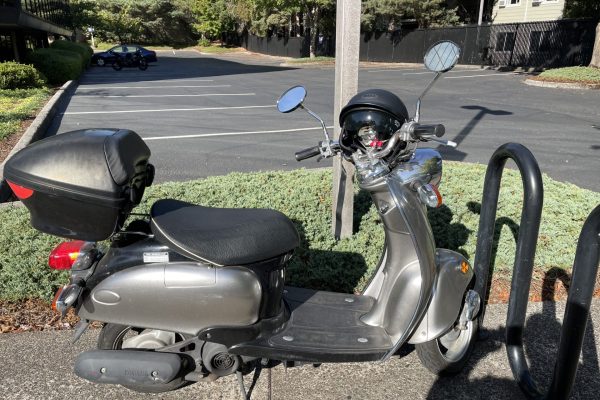
For my weight and preference to get up to speed quickly, I installed 4.5 gram sliders in my Yamaha Vino 50c scooter and it has brought new life to the bike!
Understanding the Physics of CVT Systems and Centripetal Force
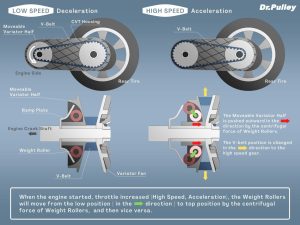
The automatic variable transmission (CVT) system is a marvel of engineering that optimizes the power delivery of small scooters. At its core, the CVT employs a pair of pulleys connected by a belt. One pulley is attached to the engine’s crankshaft, while the other connects to the scooter’s rear wheel. These pulleys adjust their diameters as the scooter accelerates, maintaining an optimal engine RPM range for efficient power transfer.
The interaction of roller weights within the variator, positioned at the engine pulley, is governed by centripetal force—a fundamental principle of physics. As the engine spins, centripetal force pushes the roller weights away from the center point of rotation. This motion causes the variator to move closer, effectively increasing the diameter of the belt rotation at the crankshaft. Simultaneously, the increasing distance between the pulleys at the wheel occurs due to the spreading effect of centripetal force. This dynamic balance continues until the scooter reaches its top speed, where the forces stabilize.
The Science Behind Conical Roller Weights
Conical roller weights, often referred to as “sliders,” have ushered in a new era of CVT performance enhancement. In contrast to the traditional round roller weights with a flat surface in contact with the belt, conical roller weights feature a tapered design. This design element transforms the engagement process, ensuring a gradual and seamless contact with the belt. As a result, belt slip is minimized, leading to a more fluid and efficient power transfer during acceleration. The conical shape further fosters consistent RPM engagement, contributing to heightened throttle response and an overall improvement in performance metrics.
Considerations for Rider Weight
Elevating scooter CVT performance involves accounting for the rider’s weight, a variable that significantly influences system behavior. Heavier riders might observe sluggish acceleration or restricted top speeds. To counteract these effects, adjustments to roller weight sizes can be made. In scenarios where the rider’s weight is substantial, slightly lighter roller weights may facilitate higher RPMs, enhancing acceleration. Conversely, lighter riders could benefit from marginally heavier roller weights to prevent excessive RPM without commensurate speed gains.
Comparing Sliders to Traditional Round Roller Weights
Dr. Pulley, a prominent player in the scooter performance aftermarket, presents a choice between sliders and conventional round roller weights. Below are the pivotal distinctions:
- Friction and Efficiency: Sliders’ conical design limits contact surface area with the belt, reducing friction and heat generation. This translates to enhanced efficiency within the CVT system.
- Acceleration: Sliders excel in swift acceleration due to their gradual engagement and diminished slip, making them ideal for urban riding with frequent stops.
- Top Speed: Traditional round roller weights exhibit an edge in achieving slightly higher top speeds, maintaining consistent RPM engagement during high-velocity cruising.
- Tuning Flexibility: Sliders permit more precise tuning by enabling adjustment of the number of sliders, tailoring the CVT’s behavior to individual preferences.
- Durability: Sliders’ even wear distribution generally extends their lifespan compared to traditional round roller weights.
Conclusion
Scooter CVT systems below 250cc harbor untapped potential, brought to the fore by roller weights with conical designs. These components, especially sliders like those offered by Dr. Pulley, reshape CVT efficiency, acceleration, and customization possibilities. As you embark on the journey to elevate your scooter’s performance, remember that roller weight design and rider weight hold equal sway. Whether you chase rapid acceleration or aspire to attain higher top speeds, your selection between sliders and traditional roller weights ultimately steers how your scooter harnesses its prowess on the roads.